
The Township maintains over 400km of roads, some of which are owned by the County of Lennox and Addington.
For any maintenance concerns, please Report a Concern or contact our Public Works department.
Register with Health Care Connect
The Township maintains over 400km of roads, some of which are owned by the County of Lennox and Addington.
For any maintenance concerns, please Report a Concern or contact our Public Works department.
County roads:
The County owns all County roads and is responsible for all major rehabilitation work and installation of new infrastructure on these roads. For more information, check the County's Roads webpage.
The Township is responsible for maintenance on County roads, such as snow removal, removal of road debris, and minor patching jobs.
These two highways in Loyalist Township are owned by the Province of Ontario and are under the jurisdiction of the Ministry of Transportation who are responsible for their maintenance. MTO contracts Webber Infrastructure Management Canada Limited for maintenance in this area.
For maintenance concerns, please call Webber at
Road patrols are conducted regularly to monitor, inspect, and report on the conditions of the road network following the Minimum Maintenance Standards (MMS). Based on these patrols and reports from residents, road maintenance work is scheduled and performed. Although maintenance happens throughout the year, specific activities tend to occur in different seasons, depending on the needs of the road.
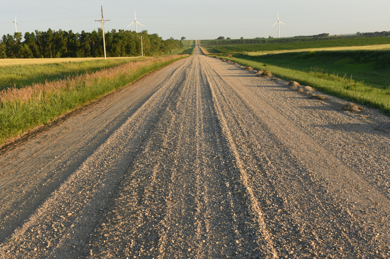
Spring and summer maintenance: Spring is considered the repair season. Our crews are busy with many maintenance tasks, including but not limited to:
Winter maintenance:
Why isn't my gravel road a paved road?
While living on a gravel road doesn’t mean it will never be upgraded, road improvements are based on factors like traffic volume, road condition, and available funding.
Decisions about upgrades, such as surface treatments, are part of a long-term asset management plan, where roads are regularly maintained to extend their lifespan.
Pavement is not typically used in rural areas, however gravel roads will see a surface treatment applied at some point in their lifetime. Budgeting for these upgrades requires careful prioritization, and while not every gravel road may be upgraded immediately, all roads are treated based on their condition, class, and usage. Ultimately, road improvements are planned over time as part of a strategic, budget-conscious approach to infrastructure.
Is it more cost-effective to maintain a gravel road or to pave it?
Maintaining a gravel road is significantly more cost-effective than paving, particularly in the short to medium term. Gravel roads have much lower initial construction costs and ongoing maintenance expenses, requiring only periodic grading and the addition of gravel, which can be done with basic equipment.
In contrast, paved roads involve high upfront costs for materials and construction, as well as expensive repairs or resurfacing over time. Gravel roads are also more adaptable to changes in traffic patterns and environmental conditions, making them a more sustainable option in rural or low-traffic areas. While paved roads last longer without frequent intervention, their long-term maintenance costs often outweigh the benefits, making gravel roads a more economical choice for many communities.
What is washboarding and what can I do to help prevent it on gravel roads?
Washboarding is a common issue on gravel roads, where the surface forms a series of parallel ridges and depressions, resembling a washboard (hence the name). This happens when vehicles, especially those with heavy tires, drive too fast and create repetitive vibrations that push the gravel into a bumpy pattern over time. It can make the road uncomfortable to drive on and contribute to faster road wear.
The best way to prevent washboarding is to stay on or below the speed limit.
My road is dusty! What will you do about it?
In the spring and summer, calcium is applied to roads to reduce dust.
We don’t apply calcium in the fall because it delays the freezing process, which then delays the start of our winter operations.

Surface treatment is an effective way to improve the performance, safety, and longevity of gravel roads. Surface-treated roads typically don’t face the same challenges as asphalt-paved roads.
Maintenance includes reapplication of surface treatment, crack sealing, grading, drainage improvements and edge maintenance. These repairs occur in the spring, summer, and fall. For updates on road construction and closures visit the road maintenance page.
How does the Township decide whether to surface treat a road or not?
There are many factors and steps involved when assessing whether a road should be surface treated.
Land Acquisition: In many cases, the township must acquire land from property owners to facilitate upgrades like drainage improvements and road widening. This is one of the first steps in the upgrade process. A professional survey may be needed to confirm the areas that need to be acquired.
Design Phase: Not all roads require a design phase, but for those that do, this phase involves checking road geometry, driving conditions, and planning any necessary safety systems. It also includes an evaluation of existing infrastructure, such as culverts, bridges, and guardrails, to determine their remaining serviceable life.
Tree Removal: Tree removal is necessary for several reasons: to remove dead trees that could damage township infrastructure if they fall, to clear space for utility installation, and to reduce shade on the road to help it dry faster.
Utility Relocation: Often, utilities (gas, hydro, telecommunications) need to be relocated before we can install proper drainage or widen the road. Many of these utilities were installed before amalgamation when roads were more like tractor paths.
Improved Drainage: Proper drainage must be established before upgrading the road surface. This helps the road base to drain effectively and fixes many problem areas, such as soft spots, by identifying sections that need excavation.
Road Surface Evaluation: After drainage improvements, the road surface is evaluated to identify remaining trouble spots. This helps pinpoint areas that require further excavation and rehabilitation. This process can take several years to finalize.
Road Excavation and Repair: Once trouble spots are identified, more extensive excavation is needed to remove problem soils and prepare the road for an upgrade. This is one of the final steps in preparing the road for surface treatment or paving. At this time and considering budget the road will also be properly widened
Surface treatment: the last step and quite possibly the most expensive. This treatment will be scheduled after all of the above has been completed, providing it has been budgeted for and that the surface treatment year aligns best with the asset management data base.

Asphalt roads are used in built up areas like subdivisions due to their durability, low maintenance needs, smoother surface, and ability to handle the specific challenges posed by heavier traffic in these areas.
Maintenance activities include crack sealing, pothole repair, line painting, road milling and resurfacing, drainage maintenance and surface sealcoating. For updates on construction and road closures visit the road maintenance page.
It looks like you're letting my road deteriorate. Why?
We stop preventative maintenance when planned future projects will impact underground utilities. These projects are typically triggered by upgrades or replacements to underground infrastructure. The goal is to capture as much life out of the road before it requires full reconstruction.
Think of it like replacing a roof on a house: most homeowners won’t replace a roof before planning an addition, however they may choose to repair and patch it to get by while they plan the addition. Similarly, we approach our roads the same way, aiming to save taxpayer money. By deferring maintenance in anticipation of future projects, we can allocate those funds to cover future expenses.
Contact Us
Loyalist Township
Box 70, 263 Main Street
Odessa, Ontario K0H 2H0
Tel: 613-386-7351
info@loyalist.ca
Sign up to our Newsletter
Stay up to date on the Township's activities, events, programs and operations by subscribing to our eNewsletters.